A Bionic Leg Controlled by the Brain
December 12, 2024
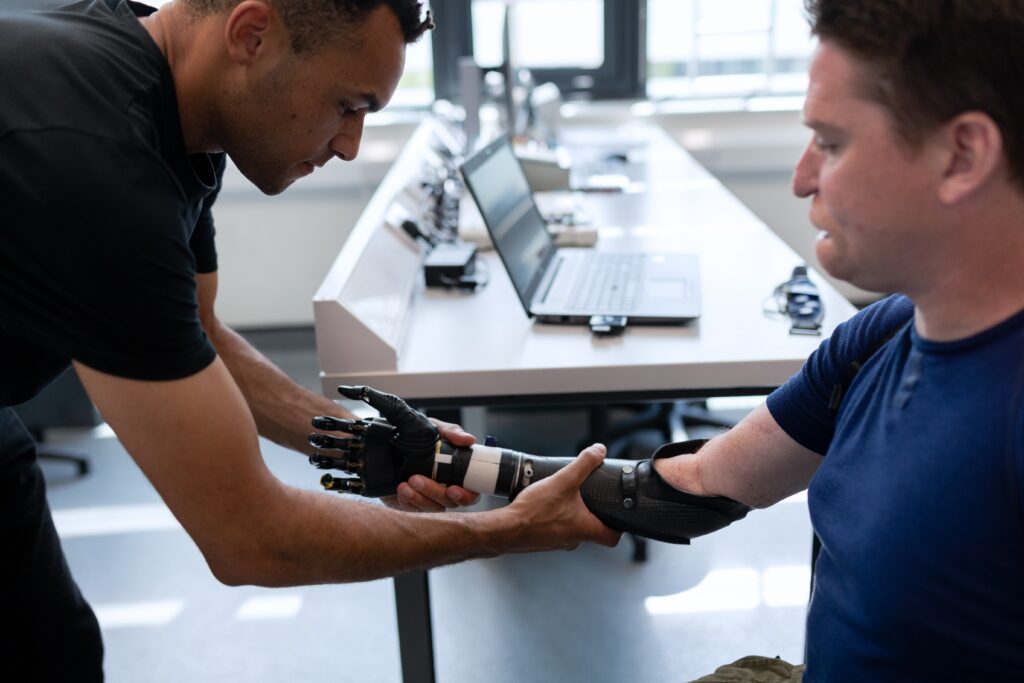
(The New Yorker) – A new kind of prosthetic limb depends on carbon fibre and computer chips—and the reëngineering of muscles, tendons, and bone.
Surgeons traditionally sew down residual muscles when they amputate a limb. There are good reasons for this—padding the bone is one—but it also severely restricts how much the muscles can move, leading to atrophy. Herr feels as if his legs are still there, but locked into rigid ski boots. The movements of his prostheses and his phantom limbs are out of synch.
More recently, however, Herr’s group has been working on a new type of prosthesis—one that is controlled by the brain. Not long ago, in his clutterless, white-walled office at M.I.T., he showed me a video of a woman who had undergone a novel kind of amputation that better preserves the ability of remaining muscles to contract and stretch. The signals that the brain sends to those muscles can be communicated, by way of numerous electrodes on the skin and external wires, to microprocessors in the prosthesis. I watched as the woman, simply by thinking, smoothly flexed and pointed her carbon-fibre toes. (Read More)
